
Tech
White Smoke From Your Exhaust? Causes, Warning Signs, and Fixes

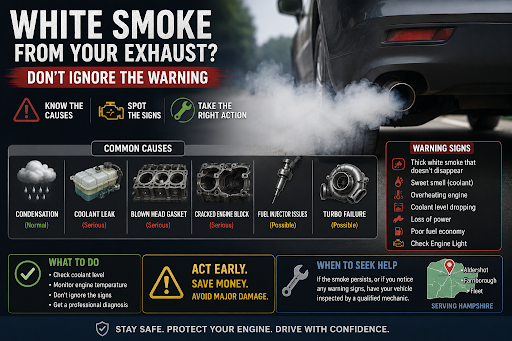
White smoke from your exhaust signals serious engine issues. Learn the causes, warning signs, and fixes to protect your vehicle and avoid costly repairs.
Seeing white smoke billowing from your exhaust can trigger instant panic. Is it steam? Is it something serious? Should you pull over immediately? White smoke isn’t always catastrophic, but it often signals issues that need prompt attention. In many cases, overheating is the underlying cause, and our guide on car overheating causes and fixes explains the warning signs drivers should never ignore. For drivers in Aldershot, Farnborough, Fleet, and across Hampshire, understanding what causes white smoke, how to recognise warning signs, and when to act can prevent minor problems from becoming expensive disasters. This guide walks you through everything you need to know about white exhaust smoke, from harmless condensation to blown head gaskets.
Why White Smoke From Your Exhaust Demands Your Attention
Your exhaust system reveals what’s happening inside your engine. Smoke colour acts like a diagnostic tool, with white smoke specifically indicating that coolant or water vapour is burning in the combustion chamber. While a small puff of steam on a cold morning is normal, thick clouds of white smoke tell a different story.
Ignoring white smoke risks catastrophic engine damage. Coolant leaking into cylinders dilutes engine oil, reducing lubrication and causing friction between metal components. Overheating becomes inevitable, and without intervention, you’re looking at warped cylinder heads, cracked engine blocks, or complete engine failure. For anyone driving through Farnham, Ash, or Tongham, catching these issues early saves thousands in repair bills and keeps you safely on the road.
Normal Steam vs. Problematic White Smoke: How to Tell the Difference
Not all white smoke means disaster. Knowing when to worry starts with understanding what’s normal.
Normal Condensation Steam
On cold mornings across Hampshire, you’ll often see thin white vapour from your exhaust when you first start the engine. This happens because moisture inside the exhaust system evaporates as hot gases pass through. The vapour dissipates quickly, usually within a minute or two of running. You’ll notice it more in winter months around Fleet or North Camp when temperatures drop.
This steam is light, transparent, and doesn’t smell unusual. It disappears as the exhaust system warms up. If this describes what you’re seeing, there’s nothing to worry about.
Problematic White Smoke
Thick, continuous white smoke that persists after warmup signals trouble. This smoke looks denser than steam, almost cloud like, and often has a sweet smell from burning coolant. It won’t clear up as the engine runs. Instead, it keeps pouring out, sometimes getting worse under acceleration.
You might notice your coolant reservoir dropping despite no visible leaks underneath the car. The engine may run rougher, idle unevenly, or lose power. These symptoms combined with heavy white smoke mean coolant is entering the combustion chamber, and you need immediate attention.
What Causes White Smoke From Your Exhaust?
Several mechanical failures produce white exhaust smoke. Understanding each cause helps you communicate effectively with mechanics and make informed decisions about repairs.
1. Blown Head Gasket
The head gasket seals the junction between your engine block and cylinder head, keeping coolant and oil separate from the combustion chambers. When this gasket fails, coolant leaks into cylinders where it burns alongside fuel, creating thick white smoke.
Head gasket failure often results from overheating, age, or poor maintenance. Drivers in busy areas like Aldershot or Farnborough who sit in heavy traffic face higher risks because engines run hotter during stop and go driving. You’ll notice other symptoms like bubbling in the coolant reservoir, milky oil on the dipstick, and overheating.
2. Cracked Cylinder Head
Cylinder heads sit atop your engine block and house the valves and spark plugs. Severe overheating can crack the metal, allowing coolant passages to connect with combustion chambers. Cracks might be hairline thin or more substantial, but either way, coolant seeps through and burns.
Cracked heads often accompany blown gaskets because both result from excessive heat. If you’ve experienced car overheating recently, white smoke afterward suggests heat damage to critical engine components.
3. Cracked Engine Block
The engine block forms the core structure housing pistons, cylinders, and coolant passages. Cracks in the block, though rarer than head gasket issues, allow coolant to enter cylinders. These cracks typically result from severe overheating, freezing coolant expansion, or manufacturing defects.
Engine block cracks are serious because repairs often exceed the vehicle’s value. In severe cases, a professional engine repair in Aldershot inspection is needed to assess whether repairing or replacing the engine is the most cost-effective option. . If diagnosed early, some cracks can be sealed, but advanced damage usually means engine replacement.
4. Damaged Intake Manifold Gasket
The intake manifold distributes air to each cylinder. On some engines, coolant passages run through or near the manifold. When the gasket sealing the manifold fails, coolant can leak into the intake tract and get sucked into cylinders during combustion.
This issue produces white smoke similar to head gasket failure but may come with rough idling and poor acceleration. Intake manifold gasket replacement is generally less expensive than head gasket work, making early diagnosis important.
5. Faulty Fuel Injectors
While less common, faulty injectors can cause white smoke if they’re stuck open or leaking excessively. Too much fuel entering cylinders creates incomplete combustion, producing white or light grey smoke. This scenario usually involves other symptoms like rough running, poor fuel economy, and a strong fuel smell.
Injector issues differ from coolant related smoke because the smell is distinctly fuel based rather than sweet, and you won’t see coolant loss.
6. Transmission Fluid in the Intake (Automatic Vehicles)
Some automatic vehicles use a vacuum operated transmission modulator connected to the intake manifold. If the diaphragm inside fails, transmission fluid gets sucked into the engine and burns, creating white or blue tinged smoke. You’ll notice slipping gears, erratic shifting, and dropping transmission fluid levels.
This issue is specific to older automatic transmissions and less common in modern vehicles.
Warning Signs That Accompany White Exhaust Smoke
White smoke rarely appears alone. Recognising accompanying symptoms helps pinpoint the root cause and assess urgency.
Rising Engine Temperature
If your temperature gauge climbs higher than normal or enters the red zone, coolant loss from internal leaks is likely causing inadequate cooling. Continuing to drive risks catastrophic damage.
Coolant Loss Without External Leaks
Check your coolant reservoir regularly. If levels drop but you don’t see puddles under the car or wet spots around hoses, coolant is burning internally. Top up temporarily, but seek diagnosis quickly.
Rough Idling and Misfires
Coolant in cylinders disrupts combustion, causing the engine to idle roughly or misfire. You might feel vibrations through the steering wheel or notice the engine stumbling during acceleration.
Milky or Frothy Engine Oil
Pull the dipstick and examine the oil. If it looks like a milkshake, milky or frothy with bubbles, coolant has mixed with the oil. This severely reduces lubrication and accelerates engine wear. Stop driving immediately and arrange recovery.
Sweet Smell From Exhaust
Burning coolant produces a distinctly sweet, syrupy smell. If you notice this alongside white smoke, coolant is definitely entering the combustion process.
Loss of Power
Compression loss from gasket or head damage reduces engine power. You’ll struggle to accelerate, especially uphill or when merging onto faster roads around Fleet or Ash Vale.
Check Engine Light
Modern vehicles monitor dozens of parameters. Coolant leaks, misfires, and temperature issues trigger warning lights. Don’t ignore them. A car diagnostic test can reveal fault codes that pinpoint the problem.
Immediate Steps to Take When You Notice White Smoke
Discovering white smoke mid journey requires quick thinking to prevent further damage.
1. Pull Over Safely
If thick white smoke appears suddenly, especially with overheating, find a safe spot to stop. Continuing to drive can warp metal components or seize the engine entirely. Use hazard lights and move to a safe location away from traffic.
2. Turn Off the Engine
Once stopped, shut off the engine immediately. Letting it run while overheating or burning coolant accelerates damage. Don’t restart until you’ve assessed the situation.
3. Check Coolant Levels
After the engine cools, open the bonnet and check the coolant reservoir. If it’s empty or very low, you’ve confirmed internal consumption. Don’t remove the radiator cap while the engine is hot, as pressurised coolant can cause severe burns.
4. Inspect for External Leaks
Look underneath the car and around hoses, the radiator, and the water pump for drips or puddles. If you spot external leaks, they might be the primary issue. If everything looks dry but coolant is missing, internal leaks are burning it off.
5. Call for Recovery
If white smoke is thick and persistent, accompanied by overheating or rough running, don’t attempt to drive home. Arrange recovery to a trusted garage. Driving further risks turning a repairable issue into an engine replacement scenario.
6. Document Symptoms
Note when the smoke started, how thick it is, any smells, and other symptoms like temperature spikes or rough idling. This information helps mechanics diagnose the problem faster and more accurately.
How Mechanics Diagnose White Smoke Issues
Professional diagnosis involves systematic testing to identify the exact cause and extent of damage.
Visual Inspection
Mechanics start with a visual check of the exhaust smoke, coolant levels, and oil condition. They’ll look for milky oil, low coolant, and external leaks to narrow down possibilities.
Compression Test
A compression test measures pressure in each cylinder. Low compression in one or more cylinders suggests head gasket failure, cracked heads, or valve issues. This test quickly identifies which cylinders are affected.
Block Test (Chemical Test)
A block tester uses special fluid that changes colour when exposed to combustion gases in the coolant system. Mechanics place the tester over the radiator or coolant reservoir while the engine runs. If combustion gases are present, the fluid changes colour, confirming a breach between combustion chambers and coolant passages.
Pressure Test
Mechanics pressurise the cooling system with a hand pump to check for leaks. If pressure drops rapidly without external leaks, coolant is escaping internally into cylinders.
Exhaust Gas Analysis
Some workshops use exhaust gas analysers to detect unusual hydrocarbons or coolant vapour. This data helps differentiate between coolant burning and fuel related issues.
Diagnostic Scanning
Modern vehicles log fault codes when sensors detect problems. Scanning the engine control unit reveals codes related to misfires, temperature anomalies, or oxygen sensor issues, guiding further investigation.
Repair Options and What to Expect
Once diagnosed, several repair paths exist depending on the cause and severity.
Head Gasket Replacement
Replacing a blown head gasket involves removing the cylinder head, cleaning mating surfaces, and installing a new gasket. Labour is intensive because many components must be removed to access the gasket. The job typically takes a full day or more.
Costs vary by vehicle complexity but expect to pay several hundred to over a thousand pounds. Timing belt replacement often happens simultaneously if your engine has one, since many components are already removed.
Cylinder Head Repair or Replacement
Cracked heads sometimes can be welded or sealed if cracks are minor. More often, the head needs replacing or resurfacing. Machinists check the head for warping and mill it flat if needed. Replacement heads, especially for older or rare vehicles, may require sourcing from specialist suppliers.
Engine Block Repair
Block cracks occasionally can be sealed with specialist sealants or welding, but success depends on crack location and severity. In many cases, engine replacement becomes more economical than block repair. Discuss options thoroughly with your mechanic before committing.
Intake Manifold Gasket Replacement
This repair is generally simpler and cheaper than head gasket work. Mechanics remove the manifold, replace the gasket, and reassemble. Costs are moderate, and turnaround is usually quicker.
Fuel Injector Replacement
If faulty injectors are the culprit, replacing the affected units restores proper combustion. Modern injectors can be expensive, but the labour is straightforward compared to internal engine work.
Preventative Measures During Repair
Quality mechanics perform additional checks during major repairs. They inspect the radiator, water pump, thermostat, and hoses, replacing worn components to prevent future issues. This holistic approach ensures your cooling system functions reliably after repairs.
Can You Drive With White Smoke Coming From Your Exhaust?
The short answer is no, not for long. Thin steam on startup poses no risk, but thick white smoke indicates serious problems that worsen with continued driving.
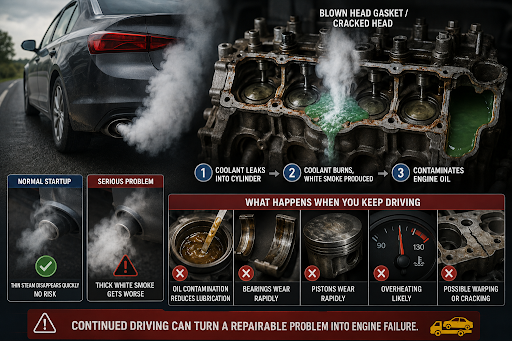
Driving with a blown head gasket or cracked head allows coolant to keep burning, contaminating engine oil and reducing lubrication. Bearings and pistons wear rapidly without proper oil protection. Overheating becomes likely, potentially warping or cracking additional components.
For drivers commuting through Farnborough, Aldershot, or travelling across Hampshire, breaking down far from home compounds the problem. Emergency recovery costs add up, and you risk complete engine failure in traffic.
If white smoke is persistent and accompanied by overheating, rough running, or coolant loss, stop driving and seek professional help immediately. Short trips to a nearby garage might be manageable if symptoms are mild, but prolonged driving is never advisable.
Preventing White Smoke and Engine Damage
Proactive maintenance prevents most causes of white exhaust smoke. Building these habits into your routine protects your engine and saves money long term.
Regular Coolant System Checks
Inspect coolant levels monthly. Top up with the correct mixture of antifreeze and water as specified in your owner’s manual. Check hoses for cracks, bulges, or leaks. Replace hoses showing wear before they fail.
Scheduled Servicing
Regular car servicing catches issues before they escalate. Mechanics inspect cooling systems, change fluids, and identify worn components during routine service appointments. Stick to manufacturer recommended intervals, especially if you drive frequently around Tongham, Fleet, or Ash Vale.
Monitor Engine Temperature
Pay attention to your temperature gauge during every journey. If it starts climbing toward the hot end, investigate immediately. Ignoring minor overheating leads to major damage.
Use Quality Coolant
Cheap or incorrect coolant can corrode internal passages and damage seals. Use the coolant type specified by your vehicle manufacturer and replace it according to the service schedule. Modern long life coolants still need changing eventually.
Avoid Overheating
Pull over if you notice overheating. Continuing to drive with a hot engine warps metal components and blows gaskets. Address cooling issues like stuck thermostats, failed water pumps, or blocked radiators promptly.
Fix Small Leaks Quickly
External coolant leaks might seem minor, but they drop coolant levels, leading to overheating and internal damage. Repair leaks as soon as you spot them, whether from hoses, the radiator, or the water pump.
Change Oil Regularly
Clean oil maintains proper lubrication and helps remove heat from engine components. Follow the oil change schedule in your owner’s manual. Neglecting oil changes accelerates wear and increases the risk of overheating related failures.
Cost Considerations for White Smoke Repairs
Repair costs vary widely depending on the underlying cause, vehicle type, and labour rates in your area.
Head Gasket Replacement
Expect costs ranging from £500 to £1,500 or more. Luxury or performance vehicles with complex engines push toward the higher end. The job includes gasket materials, machining if needed, and extensive labour.
Cylinder Head Work
Replacing or repairing a cracked head adds £300 to £800 on top of gasket work. Sourcing replacement heads for older vehicles can extend timelines.
Engine Block Repair or Replacement
Block repairs attempt to save costs but aren’t always feasible. Engine replacement, whether with a new, rebuilt, or used unit, ranges from £1,500 to several thousand pounds depending on the vehicle.
Intake Manifold Gasket
This repair typically costs £200 to £600, significantly less than head gasket work. Parts are inexpensive, but labour varies by engine design.
Diagnostic Testing
Initial diagnostics, including compression tests and block tests, usually cost £50 to £150. This investment identifies the problem accurately, preventing wasted spending on incorrect repairs.
Budget for potential additional work discovered during repairs. Mechanics often find related issues like worn water pumps or corroded radiators that need addressing to ensure long term reliability.
When to Consider Engine Replacement vs. Repair
Sometimes, extensive damage makes repair impractical or uneconomical. Deciding between repair and replacement involves several factors.
Vehicle Age and Value
If your car is older and worth less than the repair cost, replacement might not make financial sense. Investing £2,000 in repairs for a vehicle worth £1,500 leaves you underwater. Consider whether a replacement vehicle offers better value.
Extent of Damage
Multiple issues, like a blown gasket plus cracked head and warped block, push costs higher than engine replacement. A used or reconditioned engine might cost less than comprehensive repairs.
Future Reliability
Repairing major damage doesn’t guarantee trouble free motoring. If the engine has suffered severe overheating, other components may fail soon. Replacement offers a fresh start with warranty coverage.
Emotional and Practical Value
Some vehicles hold sentimental value or are difficult to replace due to specific needs. If your car is otherwise reliable and suits your requirements, investing in quality repairs makes sense.
Discuss all options with your mechanic. They can provide honest assessments of repair feasibility and expected longevity post repair.
Conclusion
White smoke from your exhaust is your engine’s way of signalling distress. Whether caused by a blown head gasket, cracked cylinder head, or intake manifold leak, the underlying issues demand prompt attention. Ignoring white smoke accelerates damage, turning repairable problems into catastrophic failures that empty your wallet.
By recognising the difference between harmless steam and serious smoke, monitoring warning signs, and acting quickly when problems arise, you protect your vehicle and avoid costly breakdowns. Regular maintenance, quality coolant, and careful attention to engine temperature keep your cooling system healthy and prevent most causes of white smoke.
For drivers across Aldershot, Farnborough, Fleet, Farnham, and throughout Hampshire, staying proactive about engine health ensures reliable, safe motoring. Don’t wait for white smoke to become a cloud of expensive repairs. Stay vigilant, maintain your vehicle properly, and seek professional help at the first sign of trouble. Your engine will thank you with years of dependable service.
Frequently Asked Questions
Is white smoke from the exhaust always bad?
Not always. Thin steam on cold mornings is normal condensation and harmless. Thick, continuous white smoke after warmup signals coolant burning inside the engine and requires immediate attention.
How much does it cost to fix white smoke from the exhaust?
Costs vary by cause. Intake manifold gasket replacement might cost £200 to £600, while head gasket replacement ranges from £500 to £1,500 or more. Engine replacement can exceed several thousand pounds.
Can I drive my car with white smoke coming from the exhaust?
Avoid driving if white smoke is thick and persistent. Continuing risks severe engine damage from overheating, oil contamination, and component failure. Arrange recovery to a garage instead.
What does white smoke with a sweet smell mean?
A sweet smell indicates burning coolant. Coolant contains glycol, which produces a syrupy odour when heated. This confirms coolant is entering the combustion chambers through a gasket or crack.
How long does a head gasket repair take?
Head gasket replacement typically takes one to two days depending on engine complexity. Some vehicles require more disassembly, extending the timeline. Discuss expected turnaround with your mechanic upfront.
Will a head gasket sealer fix white smoke?
Head gasket sealers are temporary solutions at best. They may reduce smoke for a short time but rarely provide permanent fixes. Proper mechanical repair is necessary for lasting results.

Hiring for Healthcare Administration: What Clinics and Practices Often Get Wrong

What Should You Do If You Have Been Falsely Accused of Sexual Assault?

CO2 Liquefaction: efficient solutions for producing liquid CO2

Who Is Denika Kisty? The Full Story of Jason Williams’ Wife and Former Athlete

FoxFiny com Review: Powerful Simple Platform You Should Try
