
Tech
Can Tyres Fail an MOT? Everything Drivers Need to Know

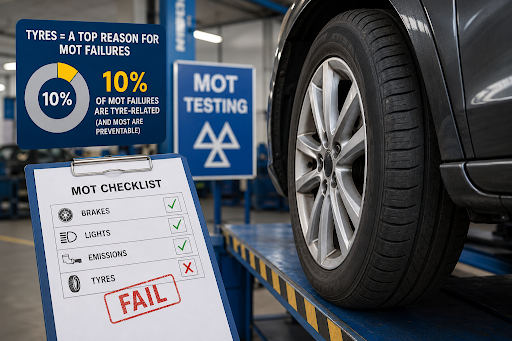
Most drivers heading into an MOT are thinking about brakes, lights, or emissions. Tyres? They often get a quick glance and nothing more. But here is the thing, tyres are one of the most common reasons vehicles fail their MOT test every single year. According to national motoring data, around 10% of MOT failures are directly linked to tyre condition, and the frustrating part is that most of these failures are entirely preventable.
Whether you are booked in for your MOT in Aldershot or simply want to get ahead of test day, understanding what inspectors actually look for on your tyres could save you from a failed result, a re-test fee, and the stress that comes with it.
What Do MOT Inspectors Actually Check on Your Tyres?
When a technician rolls your car into the bay, your tyres go through a thorough visual and physical inspection. This is not a quick glance. Inspectors are trained to spot even subtle signs of wear, damage, or incorrect fitment that could make your vehicle unsafe on the road.
Here is what they are looking for:
- Tread depth across the full width of the tyre
- Sidewall condition, including cuts, bulges, and cracks
- Correct tyre size and type for the vehicle
- Matching tyre structures on the same axle
- Tyre Pressure Monitoring System (TPMS) function
- Correct directional fitment where applicable
Each of these can result in a failure if it does not meet the required standard. Let us break down the most important ones.
The Most Common Tyre Reasons for MOT Failure
1. Insufficient Tread Depth
This is the single biggest cause of tyre-related MOT failures. The legal minimum tread depth in the UK is 1.6mm, measured in a continuous band around the central three-quarters of the tyre. Anything below this is illegal and will result in an automatic MOT failure.
A simple way to check before test day is the 20p coin method. Place a 20p coin into the tread groove. If you can see any part of the outer rim of the coin, your tread is below the legal minimum and your vehicle will fail.
Tread depth is not just a legal box-ticking exercise. It directly affects braking distance, wet weather grip, and your ability to control the car in an emergency. Many technicians recommend replacing tyres well before they hit the legal limit, particularly heading into autumn and winter months when roads around Aldershot and the surrounding areas can become unpredictable.
2. Sidewall Damage
The sidewall is the part of the tyre that absorbs road pressure and keeps your vehicle stable. If an MOT inspector sees a tear, nick, bubble, or bulge in the sidewall, it will result in an immediate fail, without exception.
Sidewall damage often happens gradually and quietly. Repeated contact with kerbs when parking, pothole impacts on rough roads, and driving on underinflated tyres all take their toll over time. By the time a bulge appears, the internal structure of the tyre may already be compromised.
If you spot any of the following, do not wait for MOT day to act:
- A visible bulge or lump on the sidewall
- A cut or tear that exposes the tyre cords beneath
- Cracking or crazing across the sidewall surface
- Any embedded object such as a nail or screw near the sidewall
3. Wrong Tyre Size or Mismatched Types
Tyres on the same axle must share the same structure. Mixing radial and cross-ply tyres on the same axle is not permitted and will result in an MOT failure, as it can lead to unpredictable braking and handling.
Your vehicle handbook specifies the exact tyre size required for your car. That size is also printed on the tyre sidewall itself. If the tyres fitted do not match what the manufacturer specifies, your vehicle will not pass. This catches out a number of drivers who have had a tyre replaced in a hurry and not verified the correct specification was used.
4. TPMS Faults
The Tyre Pressure Monitoring System is also inspected as part of the MOT. If the system is found to be faulty, it will result in a test failure. Many drivers are unaware of this. A dashboard warning light that has been ignored for weeks, or a sensor that was never reset after a tyre change, can be enough to cause a failure on an otherwise healthy vehicle.
5. Uneven Tyre Wear
Uneven or abnormal tyre wear is a common MOT failure. When tread grooves wear down unevenly, tyre traction can be compromised, and in some cases the wear brings part of the tyre below the legal limit even when the rest of the tyre looks acceptable.
Uneven wear is usually a symptom of a deeper issue, such as incorrect wheel alignment, suspension wear, or persistent under-inflation. If your tyres are wearing more on one edge than the other, it is worth having the tracking and suspension checked before your test. Resolving the root cause will not only help you pass your MOT but will also extend the life of your new tyres significantly.
What Happens If Your Tyres Fail the MOT?
If a tyre fails an MOT, the vehicle cannot legally be driven on public roads until the issue is resolved, because tyres that do not meet legal standards compromise grip, handling, and braking performance.
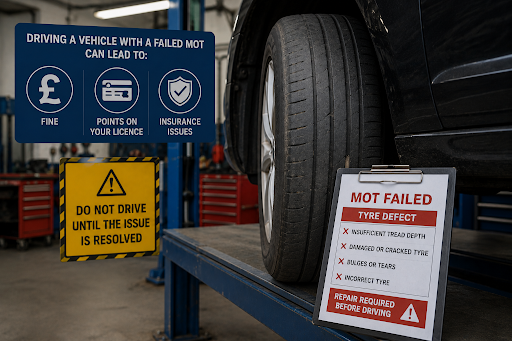
This catches some drivers off guard. A failed MOT is not just an inconvenience, it has real legal consequences. Driving a vehicle that has failed its MOT on a dangerous defect, including tyre issues, puts you at risk of a fine, points on your licence, and potential issues with your insurance. If you are unsure what a failed result means for your vehicle overall, it is worth reading through what happens if your car fails its MOT to understand your options clearly.
The good news is that most garages offering MOT testing will also carry out the tyre replacement needed to resolve the failure. You can then return for a partial re-test on the items that failed rather than repeating the full inspection.
How to Check Your Tyres Before MOT Day
You do not need specialist tools to do a basic tyre check. A few minutes before booking your test can make the difference between a pass and a fail.
Tread Depth Use the 20p coin method as described above, or pick up an inexpensive tread depth gauge. Check across the full width of the tyre, not just the centre, and repeat on all four tyres.
Sidewall Check Walk around the car and inspect each sidewall carefully. Look for bulges, cracks, cuts, or anything embedded in the rubber. Do this in a good light so nothing gets missed.
Tyre Pressure Check your pressures against the manufacturer’s recommendation, usually found on a sticker inside the driver’s door frame or in the vehicle handbook. Incorrect pressure can cause visible deformation that an inspector will flag.
TPMS Warning Light If your TPMS warning light is showing on the dashboard, get it investigated before your test. Do not assume it will be overlooked.
Tyre Markings Check that the tyres on each axle match in construction type and that directional tyres are fitted in the correct rotation direction.
If anything gives you cause for concern after your own checks, bring the car in before the test rather than hoping for the best on the day. A pre-MOT inspection from a trusted garage, including a full look at the common MOT failure codes your vehicle might be at risk of, is always a sensible step.
Does Tyre Age Matter in an MOT?
This is a question that comes up regularly, particularly among drivers with older vehicles that have low mileage but ageing rubber. For standard private passenger vehicles, there is currently no specific guidance around tyre age as an automatic MOT fail point. Inspectors focus on condition and tread rather than the date of manufacture.
That said, rubber naturally degrades over time. Tyres that are several years old may show cracking or crazing on the sidewall, which would be picked up as a condition failure even if the tread depth is technically adequate. If your tyres are looking dried out or showing surface cracking, it is worth replacing them regardless of mileage. Age-related degradation affects grip in ways that are not always visible until something goes wrong on the road.
Can Part-Worn Tyres Pass an MOT?
Part-worn tyres are legal in the UK and can pass an MOT provided they meet all the required standards at the time of inspection. However, they come with a shorter remaining lifespan and an unknown history. Cheap part-worn tyres can be tempting, but they carry poor wear history and may not meet legal standards, posing a risk to not just you but others on the road.
If you are replacing tyres ahead of your test, it is worth investing in quality rubber rather than a short-term fix that could leave you back in the same position within months.
Getting Your Tyres and Vehicle Ready in Aldershot
Drivers across Aldershot, Farnborough, Fleet, and the surrounding Hampshire areas know that keeping on top of vehicle maintenance year-round makes MOT season far less stressful. The key is not to leave tyre checks until the week before your test.
A regular service schedule helps catch tyre wear, alignment issues, and TPMS faults well before they become MOT problems. If you are due for a service alongside your MOT, car servicing in Aldershot can address both at the same time, saving time and giving you confidence that everything has been looked over properly.
Conclusion
Tyres fail MOTs more often than most drivers expect, and the reasons are almost always avoidable with a little attention. Tread depth, sidewall condition, correct fitment, and a functioning TPMS are the four areas that catch out the most vehicles every year. A simple walk-around check before your test costs nothing and can prevent a failed result, a re-test fee, and unnecessary stress.
Get into the habit of checking your tyres every few weeks rather than once a year when the MOT reminder letter arrives. Your tyres are the only part of your car in contact with the road at any given moment. Keeping them in good condition is not just about passing a test, it is about staying safe every time you drive.
Frequently Asked Questions
Can bald tyres fail an MOT? Yes. Any tyre with a tread depth below 1.6mm is classified as a dangerous defect and will result in an automatic failure. Bald or heavily worn tyres are one of the most common causes of MOT failure in the UK.
Will a slow puncture fail an MOT? Not directly, but if the tyre is visibly under-inflated at the time of inspection, it may be flagged. A slow puncture that has caused sidewall deformation or visible damage will likely result in a failure.
Can a nail in a tyre fail an MOT? It depends on the location and whether the tyre has been properly repaired. An unrepaired puncture or a nail embedded near the sidewall will almost certainly result in a failure.
Do all four tyres get checked in an MOT? Yes. All four tyres are inspected during the MOT test for tread depth, sidewall condition, correct fitment, and pressure monitoring system function.
Can mismatched tyres fail an MOT? Yes. If tyres of different construction types, such as radial and cross-ply, are fitted on the same axle, the vehicle will fail. Matching tyre structures on each axle is a legal requirement.
How long before my MOT should I check my tyres? Ideally, check your tyres at least a month before your test. This gives you enough time to replace worn or damaged tyres without rushing, and to address any underlying issues such as wheel misalignment before test day.

Hiring for Healthcare Administration: What Clinics and Practices Often Get Wrong

What Should You Do If You Have Been Falsely Accused of Sexual Assault?

CO2 Liquefaction: efficient solutions for producing liquid CO2

Who Is Denika Kisty? The Full Story of Jason Williams’ Wife and Former Athlete

FoxFiny com Review: Powerful Simple Platform You Should Try
