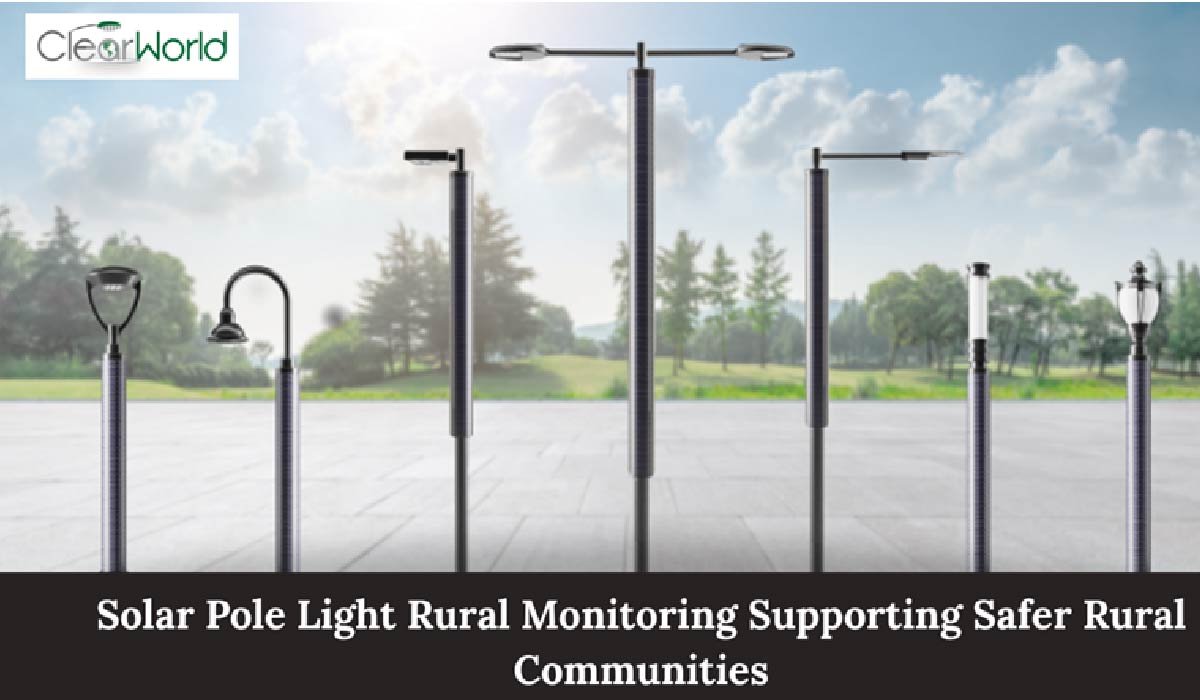
Rural roads do not forgive darkness. When a storm rolls through a remote township, takes out the grid, and leaves miles of road unlit, nobody shows up the next morning with a quick fix. That gap between a failure and a repair is exactly where lives are put at risk. A Rural Monitoring Solar Pole Light closes that gap by tracking its own performance, flagging problems before they become outages, and operating completely off-grid through weather that would bring conventional systems to their knees. This blog walks through why monitoring capability is not a feature upgrade for rural solar pole lights; it is the entire point.
Why Does Rural Weather Expose Every Weakness in a Lighting System?
Dust accumulation on solar panels quietly reduces energy capture over weeks. Extended cloud cover drains battery reserves without warning. High winds stress pole mountings in ways that go undetected until something physically fails. Extreme heat degrades battery chemistry. Freezing temperatures affect charge cycles. None of these events announce themselves; they just slowly compromise a system until the light goes out.
A Rural Monitoring Solar Pole Light does not wait for that moment. It tracks all of it in real time and sends alerts the moment performance starts to drift outside acceptable thresholds.
Here are five specific weather-related failure points that real-time monitoring actively catches:
Panel Dust Accumulation: Dust and debris build up on solar panels gradually, cutting energy intake without triggering any obvious warning. The monitoring system can detect drop in output percentages and trigger cleaning, ensuring that several weeks of poor performance do not go undetected in a remote setting.
Battery Charge Decline: Long periods without sunshine will lead to depletion of the battery charge. The monitoring system will monitor the level of charge in the battery on a daily basis and alert operators when the charge reaches dangerously low levels.
Wind Stress: High-wind events shift panel angles and stress pole mountings. Remote monitoring logs performance data during and after weather events, helping maintenance crews identify which units need physical inspection rather than sending trucks to check every pole on the road.
Voltage and Current Anomalies: Temperature swings affect electrical performance in ways that compound silently over time. Real-time voltage and current tracking inside a Rural Monitoring Solar Pole Light catches these anomalies early, long before they result in a hardware failure.
Battery Health Trending: Beyond day-to-day charge levels, monitoring systems track long-term battery health and flag degrading cells before they fail. For rural systems where replacement parts require long lead times, this predictive intelligence is genuinely invaluable.
What Benefits Does a Rural Monitoring Solar Pole Light Actually Deliver?
Beyond surviving bad weather, a solar pole light changes how rural communities manage lighting infrastructure entirely. The shift from reactive maintenance to proactive management is not a small upgrade. For townships running on tight budgets with limited crews, it is a fundamentally different way of operating.
Cost Reduction: Sending a maintenance crew to a remote rural location costs time, fuel, and labour. Monitoring systems allow technicians to diagnose faults remotely and often resolve configuration issues without a physical visit, cutting unnecessary truck rolls dramatically.
Uptime Improvement: Systems that detect faults early fix problems before they cause outages. A Rural Monitoring Solar Pole Light that alerts operators to a declining battery keeps the light on. One without monitoring goes dark and stays dark until someone notices.
Data Visibility: Rural infrastructure managers rarely have a clear picture of how their lighting network is actually performing across a spread-out area. Monitoring platforms provide dashboard visibility across every unit, showing battery levels, panel output, and fault histories in one place.
Faster Response: When a fault does occur, monitoring data tells the maintenance team exactly what the problem is, where it is, and what parts they need before they leave the depot. That precision turns a multi-day repair cycle into a single, efficient visit.
Extended System Lifespan: Undetected problems compound over time. A battery that drains too deeply repeatedly loses capacity faster. A misaligned panel that goes uncorrected reduces charge efficiency for months. Monitoring catches and corrects these issues continuously, protecting the long-term lifespan of every Rural Monitoring Solar Pole Light in the network.
Rural communities that invest in monitored solar pole lighting are not just buying light. They are buying control over infrastructure they previously had almost no visibility into.
What Limitations Should Rural Buyers Understand Before Committing?
No technology delivers without conditions, and Rural Monitoring Solar Pole Light systems are no exception. Understanding these real-world limitations upfront helps rural buyers make smarter procurement decisions rather than learning them the hard way after installation.
Connectivity Dependency Risks
Monitoring systems transmit data through cellular or LoRa networks. In areas with limited connectivity, data transmission can become intermittent. Buyers should confirm the monitoring system supports offline operation with local data storage, so performance records are not lost during connectivity gaps.
Initial Investment Consideration
Monitored solar pole lights carry a higher upfront cost than basic unmonitored units. For rural townships with constrained budgets, this gap matters. When total cost of ownership is calculated across maintenance savings and extended system lifespan, however, the monitored option consistently delivers better long-term value.
Technical Training Requirements
A monitoring platform is only as useful as the team reading it. Rural maintenance crews need onboarding on how to interpret dashboard data and respond to alerts. Without that training investment, the monitoring capability goes underutilised.
Conclusion
Rural communities deserve lighting infrastructure that works when conditions are hardest, not just when skies are clear. A Rural Monitoring Solar Pole Light delivers exactly that, real-time visibility, proactive fault detection, and weather-resilient performance built for the realities of remote installation. For any rural department serious about reliability, monitored solar pole lighting is not a premium option. It is the baseline that every road deserves.