The middle zone of the face often gets overlooked in early conversations about feminizing surgery, which is strange when you consider how much of our emotional expression lives exactly there. The space between the base of the nose and the upper lip, the height and projection of the cheekbones, the fullness of the lips themselves, all of these elements communicate femininity in ways that quietly shape every human interaction. Two procedures that address this central territory, lip lift surgery and cheek augmentation, have become increasingly important parts of the treatment plans offered at Dr. MFO Clinic, and for patients exploring lip lift surgery as part of a broader feminizing journey, understanding why this small procedure carries such disproportionate impact tends to change how the entire face gets approached.
The Philtrum And What It Quietly Communicates
There is a small vertical distance between the base of your nose and the top of your upper lip, called the philtrum, that almost nobody thinks about consciously. Yet this measurement turns out to be one of the strongest unconscious signals of gender perception in the entire face. Masculine faces typically have longer philtrums, sometimes considerably so, while feminine faces carry a shorter distance that allows the upper lip to show more prominently and the upper teeth to peek through slightly when the mouth is at rest. This single detail affects how feminine a face reads to observers who could never articulate what they are actually seeing. Reducing the philtrum through a well designed lip lift is a relatively brief surgical procedure, but the aesthetic ripple it creates touches how photographs look, how smiles appear, how the entire middle face feels balanced when someone speaks.
How The Procedure Actually Works
A lip lift involves a small incision hidden discreetly at the base of the nose, through which a carefully measured amount of skin is removed, and the upper lip is then advanced upward toward the nose. The technique is called the bullhorn lip lift because of the shape of the incision, which follows the natural curves under the nostrils. When performed correctly, the resulting scar hides almost invisibly in the transition between the nose and the upper lip. The measurement of how much skin to remove requires careful judgment, because removing too little fails to create meaningful change, and removing too much can produce an unnatural appearance that permanently alters the resting position of the mouth. Dr. Mehmet Fatih Okyay approaches this calibration with the precision that thirteen years of plastic surgery practice develops, understanding that tiny adjustments in millimeters translate into large changes in how the face ultimately reads.
Cheekbones And The Architecture Of Feminine Faces
Feminine faces tend to carry their visual weight higher than masculine faces do. Well defined cheekbones that sit prominently in the upper middle third create the classic heart shape that the human eye reads as feminine almost instantly. When natural cheekbone projection is modest, augmentation can rebuild this architectural element through either fat grafting, where the patient’s own fat is harvested from another body area and transplanted into the cheek region, or through carefully placed implants. Fat grafting tends to produce softer, more natural results with the bonus of using the body’s own tissue, though some of the transplanted fat reabsorbs over the following months. Implants provide more permanent and predictable projection but require a surgeon experienced in placement technique to avoid visible edges or asymmetry. The choice between approaches depends on each patient’s anatomy, skin quality, and long term goals.
The Surgeon Guiding These Decisions
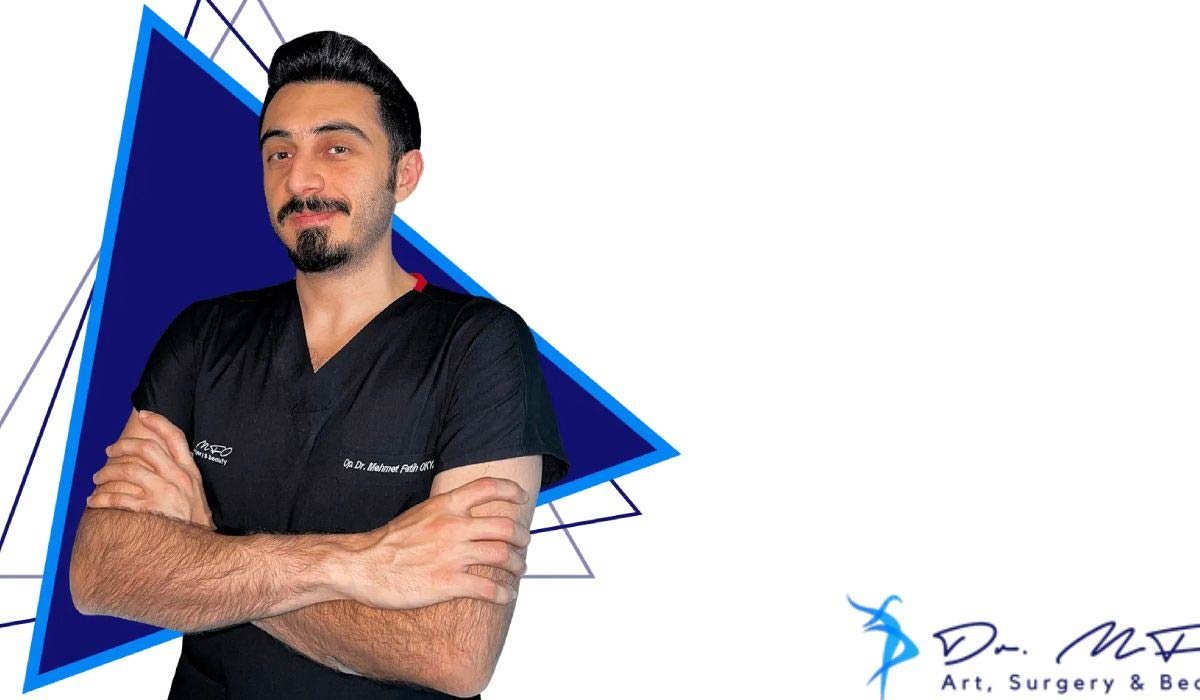
Dr. Mehmet Fatih Okyay founded Dr. MFO Clinic on June 1st, 2021, as its owner, after a long path through some of the most demanding training programs in Turkish medicine. He ranked eighth in his term in the Turkish Medical Specialization Examination, which granted him access to his residency choice at Istanbul University Cerrahpaşa Faculty of Medicine, a Plastic, Reconstructive, and Aesthetic Surgery program with international reputation. In 2018, in Brussels, he received the Fellow of the European Board of Plastic, Reconstructive and Aesthetic Surgeons distinction from the European Association of Medical Specialists, followed that same year by equivalent Turkish Board recognition. His permanent memberships span the International Society of Aesthetic Plastic Surgeons, the Turkish Plastic Surgery Association, the Turkish Aesthetic Plastic Surgery Association, and the World Professional Association of Transgender Health. He has contributed to the field through speaking engagements and organizing committee work at scientific meetings. Beyond medicine, he writes songs and poetry, plays classical guitar along with the ney and electric guitar, shares a family life with his wife and three children, and communicates in English academically, Spanish fluently, and French at an intermediate level.
The Place These Procedures Hold Within Facial Feminization Surgery
A lip lift or cheek augmentation almost never stands alone in a treatment plan. These procedures usually fit inside a broader composition that might include forehead contouring, rhinoplasty, jaw and chin reshaping, hairline advancement, and tracheal shave. The sequencing and combination of these elements requires compositional thinking that only comes from surgeons who see the face as an integrated whole rather than a collection of independent problems. A perfectly executed lip lift on a face whose forehead and jaw still carry masculinizing features produces a middle third that does not quite match what surrounds it. Planning the full sequence from the beginning, even when procedures get staged across separate operations, is what turns fragmented surgical events into coherent transformation. Dr. Okyay’s clinical interests across forehead contouring, facelift, nose aesthetics, breast feminization, and body contouring including tummy tuck and liposuction give him the wide compositional view that this kind of planning requires.
What The Recovery Actually Feels Like
Healing from these procedures tends to happen faster than from bone work, which many patients find reassuring. Lip lift recovery involves swelling that peaks around the third day and gradually subsides over the following two weeks, along with some tightness around the mouth that can temporarily affect how smiles feel. Sutures typically come out within a week, and the scar begins its long maturation process that usually reaches near invisibility by the twelve month mark. Cheek augmentation recovery depends on which technique was used. Fat grafting produces swelling that can look exaggerated initially and then gradually settles as the transplanted fat finds its permanent home, with final volume visible around the three to six month point. Implants create more predictable swelling that resolves within a few weeks, revealing the final projection sooner but without the natural softness of autologous fat. Either way, patients tend to return to normal daily activities within a week or two.
Why Istanbul Keeps Earning These Referrals
Patients who complete their journey at https://www.dr-mfo.com/ often describe something they had not expected beforehand, which is how much the city itself became part of the experience. The all inclusive package structure removes the administrative burden that exhausts international patients elsewhere, bundling accommodation, airport transfers, hospital fees, anesthesia, medications, and post operative follow up into a single transparent plan. The cost structure in Turkey allows access to surgical quality that would be financially out of reach in many other countries, without any compromise in the quality of care itself. Istanbul as a setting brings a particular texture to recovery, with its layered history, instinctive hospitality toward guests, and atmosphere of reinvention that seems to mirror the personal journey each patient is making. For procedures that reshape how someone moves through the world, that atmospheric context becomes quietly meaningful in ways that never appear on any surgical invoice but always appear in the stories patients tell afterward.