Business
How NY Construction Services Help Keep Buildings Code Compliant

Working through New York building codes and rules can feel confusing, especially because the rules change often and can be different from one place to another. For property owners, developers, and contractors, making sure every beam, wire, and pipe meets these strict standards is more than good practice; it is required by law and it helps the project succeed.
So, how do NY construction services help keep buildings code compliant? They help by guiding projects through the rules step by step, using strong code knowledge, careful planning, and steady oversight from the early design phase through final sign-off. These services matter because they help protect public health and safety across construction in New York.
New York is busy and crowded, with new projects going up all the time. The rules are set up to make buildings safe, durable, and energy-efficient. Professional construction services help teams understand the latest requirements, move through the permit process faster, and confirm that every part of the job meets (or goes beyond) what is required. This support helps avoid delays, reduce fines, and lower legal risk, which protects the owner’s investment and helps create safer buildings for everyone.
What Does Building Code Compliance Mean in New York?
Building code compliance in New York means following the laws and rules that control how buildings are designed, built, changed, and maintained. These codes are not just paperwork. They set minimum safety requirements for the people inside the building and for the public. New York is also special because the rules are split: New York City has its own Construction Codes, while the rest of New York State follows the NYS Uniform Fire Prevention and Building Code (the “Uniform Code”) and the State Energy Conservation Construction Code (the “Energy Code”). NYC can do this because it has “home rule” authority, which lets it write rules that match its dense neighborhoods and high-rise construction needs.
The Division of Building Standards and Codes, part of the New York Department of State, helps create, manage, and enforce the Uniform Code and Energy Code across the state (outside NYC). These codes are found in Title 19 of the New York Codes, Rules and Regulations (19 NYCRR). They are based on International Code Council (ICC) model codes, but with changes and local updates. Because towns and cities can add their own amendments, requirements may be very different from one area to another, which makes expert guidance useful.
Key Objectives of NYS and NYC Building Codes
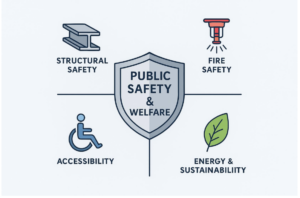
The main goal of New York building codes is to protect public health, safety, and welfare. That goal shows up in a few major areas. One is structural safety, which sets rules for foundations, load limits, and materials so buildings can handle wind, snow, and earthquakes. For example, foundation rules cover load capacity, drainage, moisture control, frost protection, and wind/seismic needs. These items help prevent cracking, water damage, and even failures.
Another major focus is fire safety. Codes include rules for fire-resistant materials, exit paths, smoke control, and fire alarm systems. These rules help prevent fires, slow down fire spread, and make it easier for people to exit safely. Accessibility is also a key area, based mainly on ICC A117.1 and the Americans with Disabilities Act (ADA), so people with disabilities can use the building. Energy use and sustainability now matter more as well. The Energy Code and NYC laws like Local Law 97 push for lower emissions and better energy efficiency in both new and existing buildings. Together, these goals aim to produce buildings that are safe, long-lasting, and more environmentally responsible.

Why Compliance Is Required for All Property Owners and Builders
For property owners, developers, and builders in New York, code compliance is required. It is a legal duty, and it also helps reduce risk. If a project does not comply, the results can include fines, stop-work orders, and legal trouble. For example, if permits are missing, the project can lose time, be fined, or be forced to stop until the issue is fixed.
Non-compliance can also create real safety problems that put lives at risk. Following code helps protect people through working fire systems, safe exit routes, and stable structures. It can also improve long-term building performance and support property value, which can make the building more appealing to tenants, investors, and buyers. Checking compliance early helps reduce risk and builds trust with inspectors and other stakeholders, which is important in New York’s competitive construction market.
How Do NY Construction Services Ensure Code Compliance?
NY construction services help connect complex rules to real work on the ground. Their approach helps keep every phase of a project-design, permitting, construction, and final occupancy-aligned with state and local requirements. This kind of support matters in New York, where a small oversight can turn into a major delay.
These services bring technical skill, code knowledge, and real jobsite experience. Instead of waiting for problems, they often spot likely issues early and help teams avoid them. By building compliance checks into the full project timeline, they help create buildings that are legal, safe, efficient, and built to last.
Expertise in Working Through New York’s Building Regulations
New York rules can be hard to follow because NYC codes differ from state codes, and local amendments can change the details even more. NY construction services know how to work with both the NYS Uniform Code and the NYC Construction Codes, including local changes that affect what is allowed. They also know related standards that are used in the codes, like NFPA fire standards, ASCE 7 for structural loads, and ASHRAE rules for energy use and ventilation.
This knowledge helps them classify projects correctly, understand what type of alteration is being done (like NYC Alt-1, Alt-2, Alt-3 or state EBCNYS levels), and apply rules like ceiling height or ventilation requirements. They also keep up with code updates. The NYS Uniform Code is updated about every three years, and NYC updates its codes through its own process. Keeping up matters, because using outdated rules (such as missing an update related to the 2024 IBC or NYC’s 2022 Construction Codes) can lead to non-compliance and expensive rework.
Coordination with Code Enforcement Officials
Good communication with code enforcement agencies is a key part of professional construction services. They often act as the main contact between the project team and agencies such as the NYC Department of Buildings (DOB) or local building departments outside NYC. This includes handling questions, sending required documents, and supporting the project during reviews and inspections. Local experience and working relationships can help solve problems faster when issues come up in the field.
If rules conflict-such as a zoning rule that impacts a fire code requirement-these services can help with filings for determinations or variances through the DOB and, where needed, other agencies like the FDNY. They understand the filing steps and paperwork requirements, especially in NYC, and they help keep communication accurate and on time. This can reduce confusion and help avoid delays or penalties.
Pre-Construction Plan Review and Permitting Support
A major way NY construction services support compliance is by reviewing plans and supporting permits before work starts. Getting code experts involved early helps line up design drawings with code rules from the beginning, which can prevent expensive changes later. These experts review plans in detail, look for likely violations, and suggest better ways to meet code.
The permit process can also be complicated, with detailed submissions and fees. Construction services help identify the permits needed-new construction, alterations, demolition, plumbing, electrical-and help file them correctly. In NYC, where DOB NOW is used for digital filing, they help make sure submissions meet format rules, file naming rules, electronic seal rules, and drawing scale rules. This reduces paperwork mistakes that can stop a project.
Regular Site Inspections and Documentation
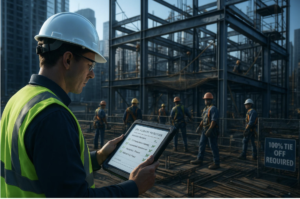
Staying compliant during construction requires steady oversight. NY construction services provide this through regular site inspections and clear documentation. They check key areas such as framing, electrical work, smoke alarms, and fireproofing to catch issues early. In NYC, the Special Inspection program is a major part of compliance, and owners must hire registered Special Inspection Agencies for key systems like structural work, fire-stopping, and energy code items.
These services also manage the TR1 Form (Technical Report 1), which assigns responsibility for each required special inspection and supports DOB reporting. Along with inspections, they focus on detailed recordkeeping, including approvals, inspection results, and material testing. Good records help with permits, help secure the Certificate of Occupancy, and make it easier to respond to audits later.
What Steps Are Involved in Achieving and Maintaining Compliance?
Code compliance is not something you do once and forget. It is an ongoing process that starts at the idea stage and continues through the life of the building. NY construction services help guide people through these steps so the process is more predictable and less stressful.
The steps combine planning, paperwork, and jobsite checks. Knowing the basic workflow helps anyone starting a project in New York, because without a clear plan, even good projects can fall out of compliance quickly.
Initial Assessment and Code Consulting
Compliance starts with an initial review and code consulting. This means checking the project against the building code, zoning rules, and any site-specific requirements. Code consultants who know the NYS Uniform Code, NYC Construction Codes, and local add-ons (such as Local Law 97 or FISP) can spot issues early.
At this stage, consultants explain unclear design points, suggest practical solutions, and help build compliance into the base design. Bringing them in early can prevent expensive design changes later and helps the project begin with a clear plan for approvals.
Filing for Permits and Approvals
After the design matches code needs, the next step is to file for permits and approvals. This step requires accurate paperwork and the correct process for the right agency. Depending on the job, this may include new building permits, alteration permits (Alt-1, Alt-2, Alt-3 in NYC), demolition permits, and plumbing or electrical permits. In NYC, filings go through the DOB, and submissions are handled through DOB NOW with specific digital requirements.
Other approvals may also be needed, such as from zoning boards or environmental agencies. Construction services handle applications by preparing drawings and paperwork, tracking fees, and following the correct steps. This matters because missing a permit or making a filing mistake can cause stop-work orders, fines, and major delays.
Conducting Required Special and Progress Inspections
During construction, inspections confirm that the work matches code and approved plans. Some inspections are routine checks by local officials, while others are special third-party inspections for key systems. In NYC, the Special Inspection program requires registered Special Inspection Agencies for items such as structural steel, concrete, fire-stopping, and energy code compliance. These inspections are tracked through forms like TR1.
Construction services help schedule inspections, confirm they are completed, and submit reports correctly. They also help manage materials testing to confirm concrete, steel, and other materials meet strength and durability requirements. This ongoing checking helps fix problems quickly, before they turn into major compliance issues.
Addressing Code Violations and Correction Procedures
Even with good planning, violations can still happen or be found during inspections. When that happens, construction services help manage the correction process. They help find the cause, plan the fix, and organize rework to bring the project back into compliance. This may include revised drawings, follow-up inspections, and direct communication with enforcement officials.
They also help keep communication clear between site safety managers, consultants, and inspectors. Pre-inspection walkthroughs can prevent many issues, but when violations do occur, experienced support helps resolve them faster, reduces extra fines and delays, and helps the project reach a Certificate of Occupancy (C of O).
Common Challenges NY Construction Services Solve
New York construction comes with common problems, often because of changing rules and the unique demands of building in dense areas. Even experienced teams can run into issues that threaten schedules and budgets. NY construction services help by spotting likely problems early and fixing issues quickly when they appear.
They help with confusing code overlap, permit slowdowns, and the challenge of updating older buildings. Their support helps projects stay compliant and reduces stress and unnecessary costs.
Interpreting Overlapping Codes and Regulations
One common problem is dealing with codes that overlap or conflict. NYC has its own codes and local laws (like Local Law 97 for emissions and FISP/LL11 for facades). Outside NYC, towns and cities can add stricter local amendments to the state code. So, requirements can change quickly from one area to another, and something accepted under NYC rules might not match state rules, or the other way around.
Federal laws like the ADA and the Fair Housing Act add another layer, with accessibility rules that must also be met. Construction services help sort through these layers, find the strictest rules that apply, and solve conflicts (for example, where a zoning requirement impacts a fire code requirement). This reduces the risk of redesigns, disputes, or legal issues later.
Managing Permit Delays and Documentation Errors
Permitting in New York-especially in NYC-can be slow and paperwork-heavy. Delays often come from missing information, filing errors, or misunderstanding what the agency needs. With DOB NOW, digital filing rules (file type, naming, electronic seals) are strict, and small errors can slow approvals. Contractors may also struggle to track permit status and keep records updated across multiple jobs.
NY construction services help by managing permit requests and keeping documents organized. They help submit accurate drawings and forms, which reduces agency back-and-forth. Some also use software tools to track permits, get alerts for expiring items, and keep records in one place, which lowers the risk of delays caused by paperwork issues.
Ensuring Compliance for Upgrades and Renovations
Renovations and upgrades can be harder than new construction, especially in older buildings. Projects may need to fix outdated fire systems, poor exit paths, missing accessibility features, or weak energy performance. State and city rules also have “triggers” that can require big upgrades based on the size or type of renovation.
In New York State, the Existing Building Code of New York State (EBCNYS) defines levels of work (Level 1, 2, 3, Change of Occupancy), each with different requirements. In NYC, Alteration Types (Alt-1, Alt-2, Alt-3) can trigger wider compliance reviews. An Alt-1, for example, may require a full review tied to use, occupancy, or exits. Construction services help identify these triggers early, plan for required upgrades (like sprinkler requirements or energy code updates), and reduce surprise scope changes and budget overruns.
Why Work with Professional NY Construction Compliance Experts?
In New York construction, hiring compliance experts is not just about checking boxes. It is a practical decision that affects whether a project stays on schedule, stays legal, and holds value long-term. Because the rules are detailed and change often, relying only on general knowledge can create real risk. Compliance experts help protect budgets, limit safety problems, and reduce legal exposure.
They bring focused skills that turn a potential problem into clear action steps. Their work helps confirm that a project is compliant on paper and safe in real life, which gives owners, contractors, and tenants more confidence.
Cost Savings from Avoiding Fines and Rework
A clear benefit of hiring compliance experts is saving money by avoiding fines and rework. Code violations in New York can lead to large penalties, stop-work orders, and legal costs. For example, failing to meet NYC Local Law 97 carbon limits can lead to large yearly penalties for bigger buildings.
Experts such as Nova Construction Services help avoid these costs by finding issues early during plan review, helping secure the correct permits, and supporting inspections so errors are caught early. This reduces expensive retrofits, limits schedule delays (which can raise labor and material costs), and helps avoid insurance complications. Starting with compliance built into the process helps protect the investment.
Reducing Legal and Safety Risks
Compliance experts also help reduce legal and safety risk. Codes exist to protect people. If a building is not compliant, it can create unsafe conditions, accidents, injuries, or even structural failures. That can lead to lawsuits and serious damage to a company’s reputation.
NY construction services support safety by following code rules and related safety requirements, including OSHA rules and NYC worker training requirements like Site Safety Training (SST). They put safety procedures in place, complete inspections across major building systems, and confirm that materials and systems meet required standards. By focusing on safe exits, fire systems, and stable construction, they help reduce liability and support a safer site and safer building for future occupants.

Staying Ahead of Regulatory Changes
New York rules change often as new building methods, safety needs, and environmental goals develop. Keeping up with updates takes ongoing attention. The NYS Uniform Code updates on a schedule, while NYC updates its codes through its own process, including City Council actions like the move from the 2014 to the 2022 NYC Construction Codes.
Compliance experts track changes through official bulletins, mailing lists, and NYC legislative updates. This helps them plan for new deadlines (such as Local Law 97 targets in 2024 and 2030, or future updates to facade inspection and major building definitions) and help clients make design choices that will still work in the future. Working with experts helps projects stay compliant and better prepared for future rule changes.
Frequently Asked Questions about NY Building Code Compliance
Do All Projects Require a Permit in New York?
Most meaningful construction projects in New York need a permit. This includes new construction, major alterations that change use, occupancy, or exit paths (such as an Alt-1 in NYC), structural work, additions, and work tied to plumbing or electrical systems. Even projects like finishing a basement, building a deck, or adding an extension to a one- or two-family home outside NYC often need a permit from the local building department.
Minor cosmetic work-like painting, changing flooring, or basic repairs that do not affect structure, fire safety, or exit paths-often does not need a permit. The best approach is to check with the local building department or a compliance expert early, because missing even one permit can lead to stop-work orders and delays.
What Happens if a Building Is Found Non-Compliant?
If a building is found non-compliant, the results can be serious. Common outcomes include fines and a stop-work order that pauses construction until issues are fixed. Non-compliance can also lead to legal trouble, especially if it creates safety hazards or causes damage or injury.
In severe cases, permits may be revoked or the project may be shut down. It can also harm a contractor’s or developer’s reputation, making future work harder to win. Fixing violations usually involves revised plans, repair work, and re-inspections, which add time and cost.
How Can Technology Streamline Code Compliance?
Technology is changing how code compliance work is handled in New York. Digital permitting tools like NYC’s DOB NOW platform allow online submissions and reduce paper forms, but they also require the correct digital formats and file rules.
Beyond permitting, software can track compliance items such as permit status, worker certifications, and inspection deadlines in real time. Automated alerts can help prevent missed renewal dates. Digital document systems store records in one place so teams and regulators can access them faster, which improves coordination and helps with audits. Mapping tools can also support zoning and land-use checks, while online portals and notifications can make the process clearer for everyone and help speed up approvals.
The balance between new construction ideas and strict rules shapes how New York builds. As the state keeps growing, safety, sustainability, and durability remain key goals. Building codes change over time based on past lessons and new needs, including preparing for climate risks. This helps make sure buildings are more than steel and glass-they are safe and efficient places for people to live and work.
In the future, more technology-like energy modeling tools and digital compliance platforms-will play a bigger role in managing code requirements. These tools help construction teams meet today’s rules while getting ready for future updates. Overall, code compliance in New York supports a shared goal: safer, more sustainable, and more durable communities for years to come, where each building reflects careful planning and consistent follow-through on required standards.